
Guettarda speciosa, with common names sea randa, or zebra wood,[3][4] is a species of shrub in the family Rubiaceae found in coastal habitats in tropical areas around the Pacific Ocean, including the coastline of central and northern Queensland and Northern Territory in Australia, and Pacific Islands, including Micronesia, French Polynesia and Fiji, Malaysia and Indonesia, Maldives and the east coast of Africa. It reaches 6 m in height, has fragrant white flowers, and large green prominently-veined leaves. It grows in sand above the high tide mark.
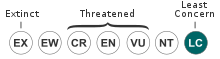
| Guettarda speciosa | |
|---|---|

| |
_(7794887190).jpg)
| |
| Guettarda speciosa (artist John Lindley) | |
Scientific classification 
| |
| Kingdom: | Plantae |
| Clade: | Tracheophytes |
| Clade: | Angiosperms |
| Clade: | Eudicots |
| Clade: | Asterids |
| Order: | Gentianales |
| Family: | Rubiaceae |
| Genus: | Guettarda |
| Species: | G. speciosa
|
| Binomial name | |
| Guettarda speciosa | |

| |
| Occurrence data from GBIF[2] | |
Taxonomy and naming edit
Guettarda speciosa was originally described by Carl Linnaeus in volume two of his Species Plantarum in 1753, citing Java as its origin.[5] The genus was named in honour of the 18th century French naturalist Jean-Étienne Guettard, while the specific epithet is derived from the Latin speciosus 'showy'.[6] It is the type species of the genus. Its closest relatives are all native to the neotropics, yet it has dispersed widely across tropical habitats worldwide.[7]
Alternate names in the Cook Islands include Ano, Hano, Fano, and Puapua. The last is also used in Samoa, and the similar Puopua in Tonga; New Zealand however uses the term for the Clematis paniculata.[8][9] It is known as utilomar [wudˠiːlʲɔːmʲɑrˠ] in the Marshall Islands.[10]
Description edit
It is a perennial shrub or small tree 2–6 m (7–20 ft) tall by 1–3 m (3.5–10 ft) wide with smooth creamy grey bark. The large oval-shaped leaves are 15–23 cm (6–9 in) long by 10–18 cm (4–7 in) wide. Dark green and smooth above with prominent paler veins, they are finely hairy underneath. Flowering is from October to May, the fragrant white flowers are 2.5–3 cm (1–1+1⁄4 in) long with 4–9 lobes. These are followed by sweet-smelling globular hard fruit, measuring 2.5 cm–2.8 cm × 2.2 cm–2.5 cm (0.98 in–1.10 in × 0.87 in–0.98 in), which mature September to March.[11][12]
Distribution and habitat edit
Guettarda speciosa is found in coastal habitats in tropical areas around the Pacific Ocean, including the coastline of central and northern Queensland and Northern Territory in Australia, and Pacific Islands, including Micronesia, French Polynesia and Fiji, Malaysia and Indonesia, Maldives and the east coast of Africa. As its name suggests, the beach gardenia grows on beaches and sandy places above the high tide level.[11]
Ecology edit
The timing of the flowers' opening at night suggests they are pollinated by moths.[6]
On Christmas Island, the Christmas white-eye (Zosterops natalis) visits the flowers, while the Christmas Island red crab (Gecarcoidea natalis) eat the fallen fruit.[6] The Mariana Fruit Bat (Pteropus mariannus) feeds on the fruit and flowers, acting as a vector for the dispersal of seeds.[citation needed]
Human use edit
Use by indigenous cultures edit
The large leaves were used in various ways by the indigenous people of northern Australia; they could hold food, and when heated, they were given to relieve headaches and aches in limbs. The stems could be used to make Macassan pipes.[13] The flowers were used to scent coconut oil on the Cook Islands, and the wood for dwellings and canoes.[8] Amongst the Marshallese people of Kwajalein, the plant is regarded as possessing spiritual power.
Cultivation edit
A very useful plant for seaside planting in tropical climates, Guettarda speciosa needs a sunny aspect and well-drained soil. It has proven difficult to propagate, as this must be done by seed which may take months to germinate.[11]
References edit
- ^ IUCN SSC Global Tree Specialist Group & Botanic Gardens Conservation International (BGCI) (2020). "Guettarda speciosa". IUCN Red List of Threatened Species. 2020: e.T160300944A160300946. doi:10.2305/IUCN.UK.2020-1.RLTS.T160300944A160300946.en. Retrieved 24 May 2021.
- ^ Guettarda speciosa GBIF.org (28 November 2018) GBIF Occurrence Download https://doi.org/10.15468/dl.ncywcn
- ^ "Guettarda speciosa". Germplasm Resources Information Network. Agricultural Research Service, United States Department of Agriculture. Retrieved 21 November 2014.
- ^ F.A. Zich; B.P.M Hyland; T. Whiffen; R.A. Kerrigan (2020). "Guettarda speciosa". Australian Tropical Rainforest Plants, Edition 8. Commonwealth Scientific and Industrial Research Organisation (CSIRO). Retrieved 21 March 2021.
- ^ Linnaeus C (1753). "Tomus II". Species Plantarum (in Latin). Vol. 2. Stockholm: Laurentii Salvii. p. 991.
- ^ a b c Du Puy, D.J.; Telford, I.R.H.; Orchard, A.E. (1993). "Guettarda speciosa L., Fl. Australia 50". Flora of Australia Online. Canberra, ACT: Commonwealth of Australia. Archived from the original on 4 December 2021. Retrieved 21 May 2021.
- ^ Achille, Frédéric; Motley, Timothy J.; Lowry, Porter P.; Jérémie, Joël (2006). "Polyphyly in Guettarda L. (Rubiaceae, Guettardeae) Based on Nrdna ITS Sequence Data1,2". Annals of the Missouri Botanical Garden. 93: 103. doi:10.3417/0026-6493(2006)93[103:PIGLRG]2.0.CO;2. ISSN 0026-6493.
- ^ a b McCormack G (2007). "Guettarda speciosa". Bishop Museum: Cook Islands Biodiversity Database. Bishop Museum. Retrieved 1 June 2008.
- ^ "Pua". Te Māra Reo: The Language Garden. Benton Family Trust. 2023.
- ^ "Marshallese-English Dictionary".
- ^ a b c Elliot, Rodger W.; Jones, David L.; Blake, Trevor (1990). Encyclopaedia of Australian Plants Suitable for Cultivation: Vol. 5. Port Melbourne: Lothian Press. p. 162. ISBN 0-85091-285-7.
- ^ Brock, John (2001) [1988]. Native plants of northern Australia. Frenchs Forest, New South Wales: New Holland Press. p. 211. ISBN 1-876334-67-3.
- ^ Levitt, Dulcie (1981). Plants and People: Aboriginal Uses of Plants on Groote Eylandt. Canberra: Australian Institute of Aboriginal Studies. ISBN 0-391-02205-9.
External links edit
 Media related to Guettarda speciosa at Wikimedia Commons
 Data related to Guettarda speciosa at Wikispecies

